
Your Gut Is a Second Brain. Stop Treating It Like a Garbage Chute

You’ve felt it your whole life without knowing what it was.
Butterflies before a big meeting. Nausea before an exam. That stomach-drop the second you read a bad email. Cramping right when the stress hits. Everyone calls it a “gut feeling” and treats it like a metaphor.
It isn’t a metaphor. It’s a signal from your second brain — literal, biological, and constantly running whether you notice it or not
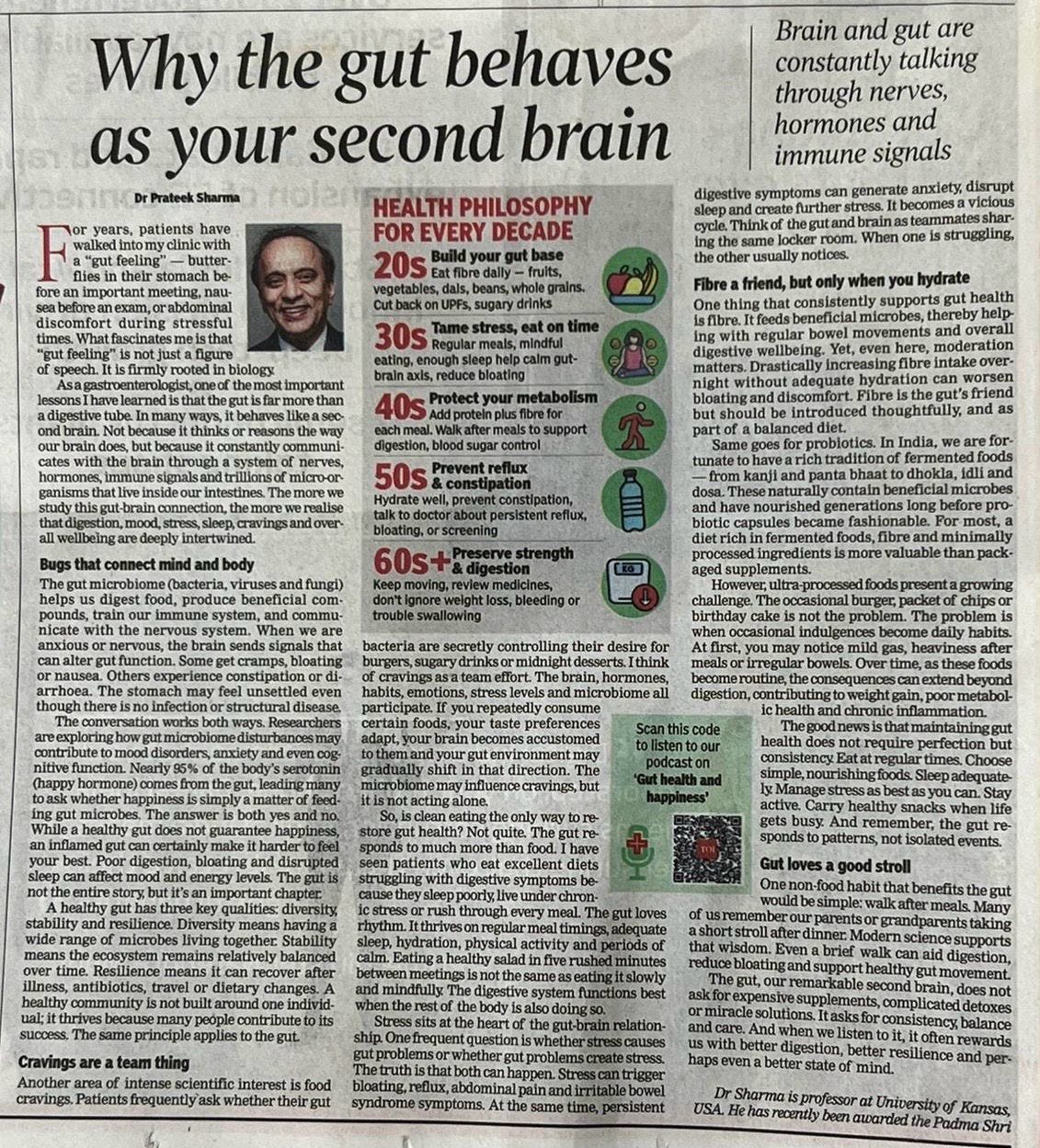
.Your gut houses over 100 million nerve cells. It produces roughly 95% of your body’s serotonin — the same neurotransmitter Prozac targets to treat depression. It has its own reflexes, its own memory, its own decision-making capacity. Gastroenterologists call it the enteric nervous system. Neurologists have started calling it what it actually is: a second brain.
And it’s talking to your first one every second of every day, through nerves, hormones, and immune signals. What you eat doesn’t just affect your waistline. It affects your mood, your focus, your sleep, your cravings, and your capacity to handle stress.
Below is what the latest gut science actually says — including the decade-by-decade protocol most people never see, and the five daily habits that separate people whose guts age well from people who end up on three medications by 55.
The bug army you’ve never met
Trillions of bacteria, viruses, and fungi live inside your intestines right now. This is your microbiome. It’s not a passive tenant — it’s a working ecosystem that helps digest food, produces beneficial compounds, trains your immune system, and constantly negotiates with your nervous system.
A healthy microbiome has three qualities:
Diversity. A wide range of microbes living together. Monoculture crashes; ecosystems adapt.
Stability. The community stays relatively balanced across weeks and months.
Resilience. It bounces back after antibiotics, travel, illness, or dietary chaos.