
Knowledge Workers Are Productive for 3 Hours a Day

The average knowledge worker is productive for less than three hours of an eight-hour day.
The rest goes somewhere. It doesn’t go to thinking. It doesn’t go to building. It goes to what researchers now call “work about work” — coordination, status updates, app-switching, hunting for files, sitting in meetings nobody prepared for.
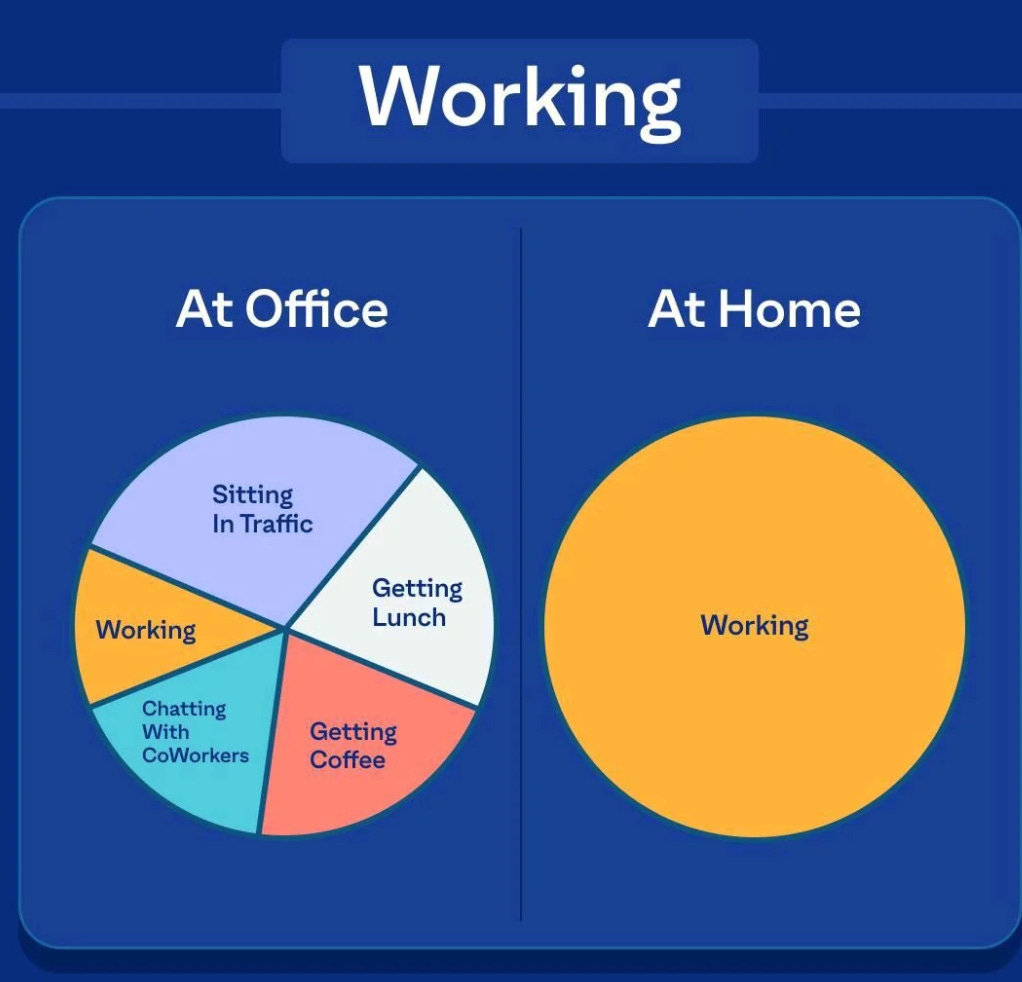
A pie chart on the distribution of time spent while working at office vs home! 😂
Below are the numbers behind that collapse. They explain why your team feels exhausted but ships nothing, why your calendar is full but your projects are stuck, and why adding another tool keeps making it worse.
Some of the numbers are bleak. A few point at the way out.
The interruption economy
Workers are interrupted every 2 minutes during core hours — roughly 275 times a day. That’s from Microsoft’s 2025 Work Trend Index. Meetings, emails, Slack pings, calendar alerts, the colleague who “just has a quick question.”
It takes 23 minutes and 15 seconds to fully recover deep focus after an interruption. That number comes from Gloria Mark’s research at UC Irvine, and it’s been replicated for two decades.
Do the math. Interrupted every two minutes, 23 minutes to recover. The recovery window is longer than the focus window. Most knowledge workers spend the workday in cognitive limbo — never fully focused, never fully recovered.
Half of all meetings are scheduled during peak cognitive hours (9-11 AM and 1-3 PM). The exact windows your brain is most capable of complex work are the windows we systematically block out for status updates.
Work about work
60% of work time goes to “work about work.” Asana’s State of Work Innovation found that the majority of the average workday is now consumed by coordination, communication, app-switching, and tracking down decisions. Only 40% remains for the skilled work people were actually hired to do.
The breakdown is brutal:
103 hours per year in meetings deemed unnecessary
209 hours per year on duplicated work
352 hours per year talking about work instead of doing it
127 hours per year regaining focus after interruptions
That’s almost 800 hours a year — roughly 20 full work weeks — burned on overhead that produces nothing.
The meeting tax
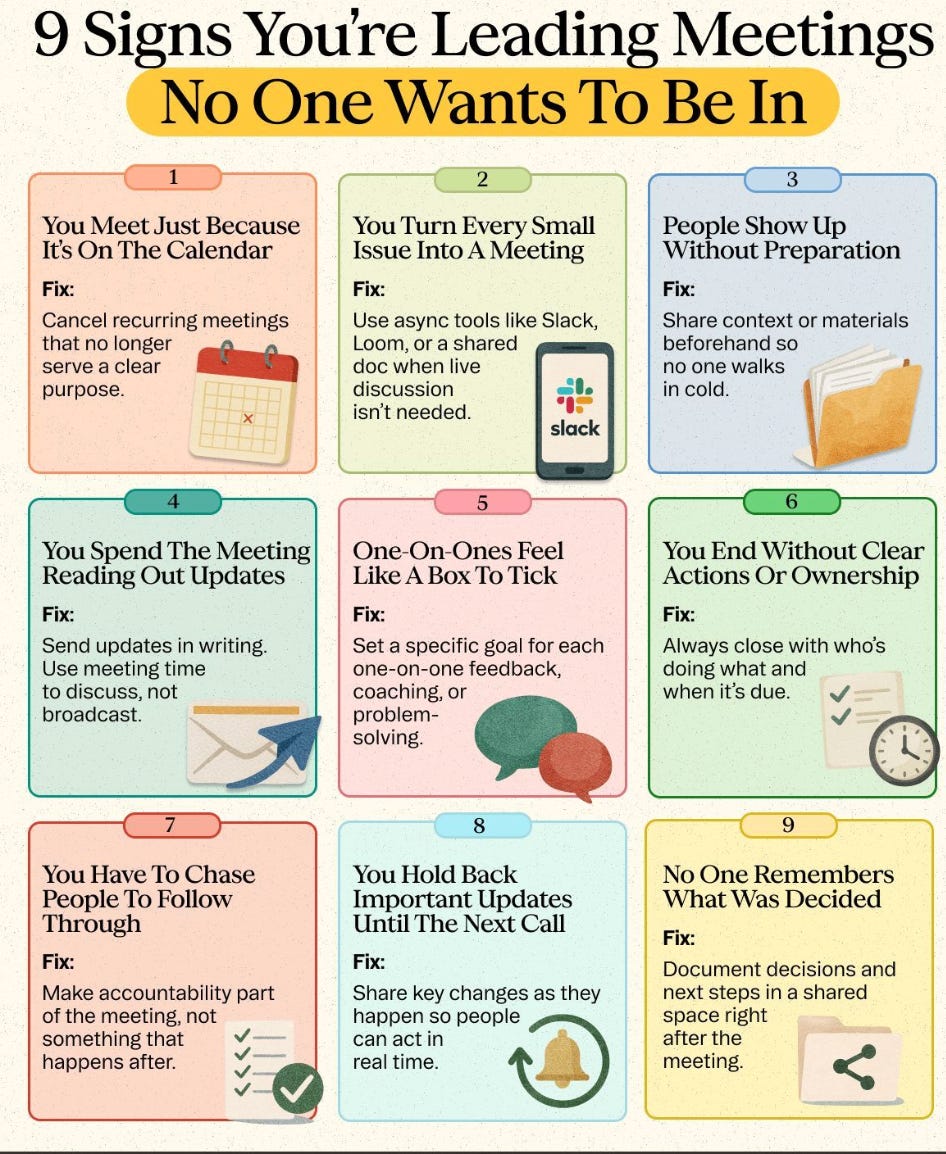
Employees spend 11.3 hours a week in meetings — 28% of the workweek. Tuesday carries the heaviest load. Friday is lightest. Recurring meetings are the worst offender: 64% have no structured agenda.